
Introduction
A dead car battery can happen unexpectedly, whether you accidentally left the headlights on, forgot to switch off the interior lights, or your battery has simply reached the end of its life. Fortunately, if you have a good set of jumper cables and another vehicle with a healthy battery, you can safely jump start your car in just a few minutes.
However, connecting the cables in the wrong order can damage your car’s electrical system or even cause sparks near the battery. By following the correct procedure, you can get your vehicle running safely and avoid unnecessary repairs.
In this guide, we’ll explain everything you need to know about jump starting a car using jumper cables, along with important safety precautions and common mistakes to avoid.
What You’ll Need
Before you begin, make sure you have the following:
- A good quality set of jumper cables
- A second vehicle with a fully charged battery
- Safety gloves (recommended)
- Safety glasses (optional but recommended)
- Both vehicles parked close enough for the cables to reach, without touching each other
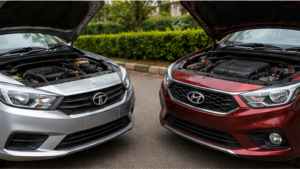
Step 1: Park Both Vehicles Safely
Park the vehicle with the good battery close to the vehicle with the dead battery.
Before connecting the jumper cables:
- Switch off both engines.
- Put both vehicles in Park (Automatic) or Neutral (Manual).
- Apply the parking brake.
- Turn off headlights, air conditioning, music system, and other electrical accessories.
This helps reduce electrical load and improves safety during the jump-start process.
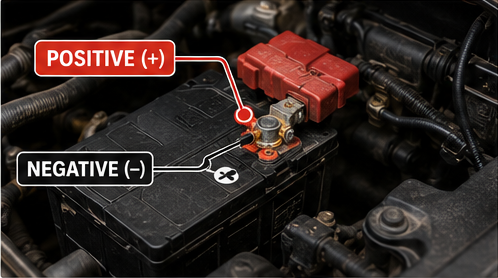
Step 2: Locate the Battery Terminals
Open the bonnet of both vehicles and locate the batteries.
Identify the terminals:
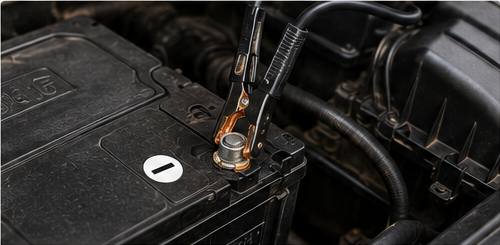
- Positive (+) terminal – usually covered with a red cap.
- Negative (–) terminal – usually black or connected to the vehicle body.
Make sure the terminals are clean and free from heavy corrosion before connecting the jumper cables.
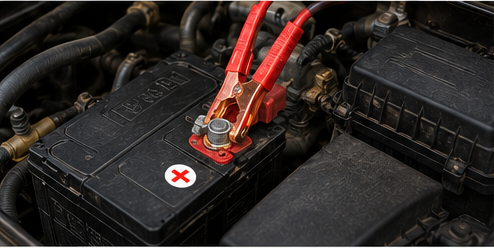
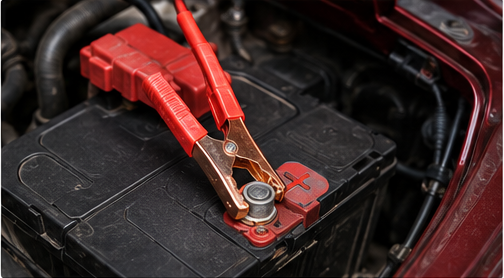
Step 3: Connect the Jumper Cables Correctly
Connecting the jumper cables in the correct order is very important. Follow these steps carefully:
1. Connect the Red Cable to the Dead Battery
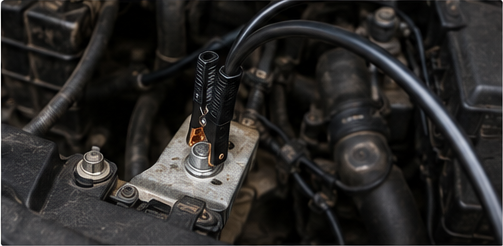
Attach one red (+) clamp to the positive (+) terminal of the dead battery.
2. Connect the Other Red Clamp
Attach the other red (+) clamp to the positive (+) terminal of the good battery.
3. Connect the Black Cable to the Good Battery
Attach one black (–) clamp to the negative (–) terminal of the good battery.
4. Connect the Last Black Clamp
Attach the remaining black (–) clamp to an unpainted metal part of the engine or chassis of the car with the dead battery. Do not connect it to the negative terminal of the dead battery.
This helps reduce the risk of sparks near the battery.
Step 4: Start the Vehicles
- Start the engine of the vehicle with the good battery.
- Let it idle for 2–3 minutes.
- Now try to start the vehicle with the dead battery.
- If it doesn’t start, wait another 2–3 minutes and try again.
Do not crank the engine continuously for more than 10 seconds. If the engine still doesn’t start after a few attempts, the battery or another component may need inspection.
Step 5: Remove the Jumper Cables Safely
Once the car starts, remove the cables in the reverse order:
- Remove the black clamp from the engine/chassis of the previously dead vehicle.
- Remove the black clamp from the good battery.
- Remove the red clamp from the good battery.
- Remove the red clamp from the newly started vehicle.
Keep the engine running for at least 20–30 minutes or drive the vehicle to help recharge the battery.
Pro Tip
If your battery keeps going dead even after jump-starting, it could indicate:
- An old or failing battery
- A faulty alternator
- Loose or corroded battery terminals
- An electrical drain while the car is parked
In such cases, have the battery and charging system tested as soon as possible.
Common Mistakes to Avoid
Many people make small mistakes while jump-starting a car that can damage the battery or electrical system. Avoid these common errors:
- Connecting the jumper cables in the wrong order.
- Allowing the red and black clamps to touch each other.
- Connecting the final black clamp to the negative terminal of the dead battery instead of a metal grounding point.
- Trying to jump-start a battery that is cracked, leaking, or badly damaged.
- Revving the donor vehicle’s engine excessively.
- Removing the cables in the wrong order.
- Ignoring signs of severe battery corrosion.
Safety Tips
Follow these safety precautions before jump-starting any vehicle:
- Read your vehicle owner’s manual for any specific instructions.
- Wear gloves if available.
- Keep the jumper cables away from moving engine parts.
- Never smoke or use an open flame near the battery.
- Ensure both vehicles are not touching each other.
- If you notice a burning smell, smoke, or swelling of the battery, stop immediately and seek professional help.
Frequently Asked Questions (FAQs)
1. How long should I let the donor car run before starting the dead car?
About 2–3 minutes is usually enough before attempting to start the other vehicle.
2. Can I jump-start a completely dead battery?
Sometimes yes, but if the battery is old, damaged, or has an internal fault, jump-starting may not work.
3. How long should I drive after a jump start?
Drive for at least 20–30 minutes to help recharge the battery. If possible, have the battery tested afterwards.
4. Is it safe to jump-start any car?
Most petrol and diesel cars with 12-volt batteries can be jump-started. However, always check your owner’s manual, especially for hybrid or electric vehicles, as the procedure may differ.
5. Why does my battery keep going dead?
A weak battery, faulty alternator, loose battery terminals, or an electrical drain can all cause repeated battery discharge. If it happens often, have the vehicle inspected.
Conclusion
Knowing how to jump-start a car safely is a valuable skill for every driver. By following the correct cable connection sequence and observing basic safety precautions, you can often get your vehicle back on the road within minutes. If your battery repeatedly goes flat, don’t ignore the problem—have the battery and charging system checked to prevent unexpected breakdowns.