
Engine oil is one of the most important fluids in any car. It lubricates moving engine parts, reduces wear, helps control heat, and keeps the engine running smoothly. If the oil level becomes too low, the engine can suffer poor lubrication, overheating, increased wear, and in severe cases, serious damage.
The good thing is that checking engine oil level at home is simple and takes only a few minutes. You do not need any special tools, and every car owner should know how to do this basic check. It can help you spot low oil early, avoid engine trouble, and keep your car in good condition between services.
In this guide, we will look at the correct way to check engine oil level at home, when to do it, what the oil marks mean, and when you should top up or get the car inspected.
Why Checking Engine Oil Level Is Important?
Your car engine depends on the right amount of clean engine oil. If the oil level drops too much, lubrication becomes poor and the engine may start wearing faster than normal. On the other hand, if the oil level is overfilled, that can also create problems.
Regular oil level checks can help you:
- spot oil consumption early
- avoid driving with dangerously low oil
- notice leaks before they become serious
- improve engine life
- stay safe between scheduled services
When Should You Check Engine Oil?
A good habit is to check engine oil:
- every 2 to 4 weeks
- before a long trip
- if the engine oil warning light comes on
- if you suspect an oil leak
- after servicing, if you want to confirm the level
- if your car is older or known to consume some oil
Things to Keep in Mind Before Checking Engine Oil
Before checking the oil, make sure you follow a few basic points. This helps you get a correct reading.
1. Park the Car on Level Ground
Always park the car on a flat surface. If the car is tilted, the oil inside the engine may collect to one side and give an incorrect reading.
2. Switch Off the Engine
Do not check engine oil with the engine running. Switch off the engine first.
3. Wait a Few Minutes
After switching off the engine, wait about 5 to 10 minutes. This allows the oil to settle back into the oil sump, so the reading on the dipstick becomes more accurate.
4. Keep a Clean Cloth or Tissue Ready
You will need to wipe the dipstick once before checking the actual oil level.
Step-by-Step: How to Check Engine Oil Level at Home
Step 1: Open the Bonnet
Open the car bonnet properly and secure it using the support rod or bonnet stay, if required.
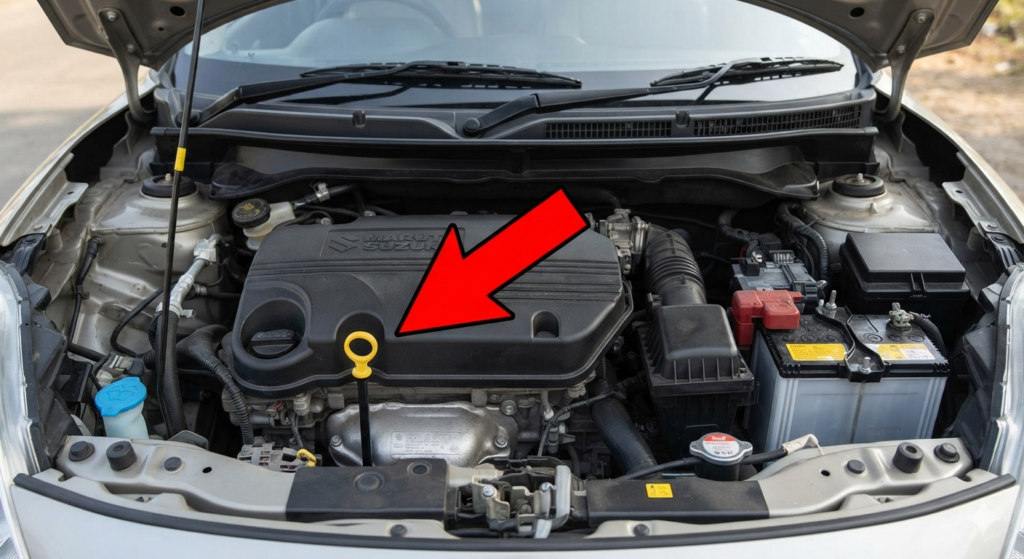
Step 2: Locate the Engine Oil Dipstick
Find the engine oil dipstick in the engine bay. In most cars, it has a bright-colored handle such as yellow, orange, or red, so it is easier to identify.
If you are not sure where it is, check the car owner’s manual once.
Step 3: Pull Out the Dipstick
Carefully pull the dipstick out fully.
Step 4: Wipe It Clean
Use a clean cloth, paper tissue, or rag to wipe the dipstick clean.
The first reading is usually not accurate because oil may have splashed on the dipstick while the engine was running.
Step 5: Insert the Dipstick Back Fully
After wiping the dipstick clean, insert it fully back into its tube.
Step 6: Pull It Out Again and Read the Oil Level
Now pull the dipstick out again and look carefully at the oil mark.
Most dipsticks have:
- MIN and MAX marks
or - two holes / notches / lined area showing the safe oil range
The oil level should ideally be:
- between MIN and MAX
- preferably closer to MAX, but not above it
If the oil is:
- near MIN → it may need topping up soon
- below MIN → do not ignore it; the oil level is low
- above MAX → the engine may be overfilled, which is also not good
How to Understand the Dipstick Reading
Here is a simple way to understand what you are seeing:
Oil level near MAX
This is generally fine. It means the engine has a good amount of oil.
Oil level in the middle
Usually okay, as long as it is comfortably above the minimum mark.
Oil level very close to MIN
You should keep an eye on it and consider topping up if needed, especially before a long drive.
Oil level below MIN
This means the engine oil is too low and should be corrected as soon as possible.
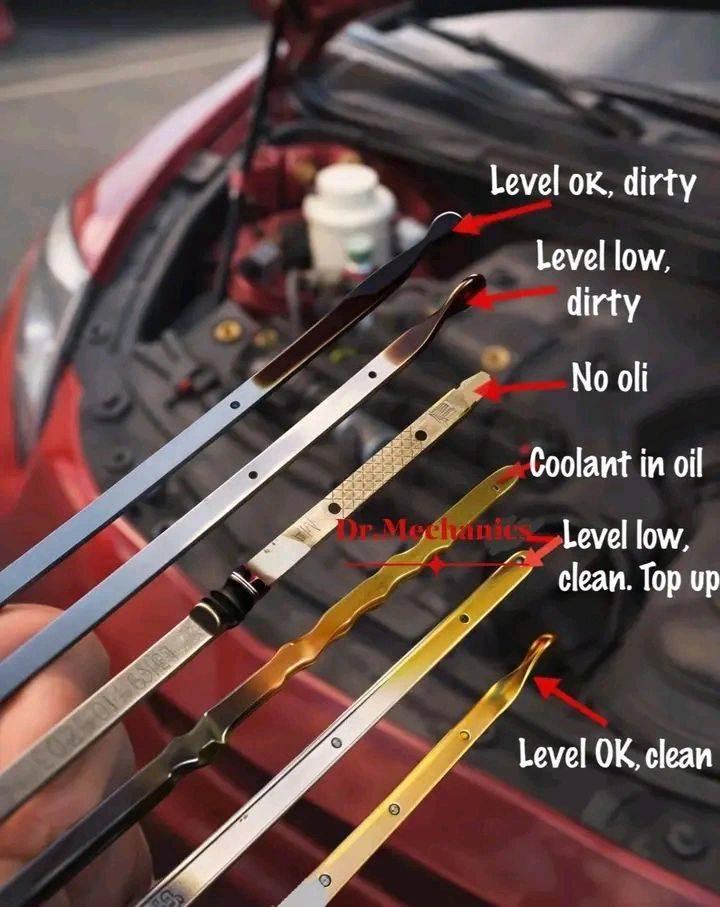
Also Check the Condition of the Oil
While checking the level, also look at the oil itself.
Healthy engine oil may look:
- light brown to dark brown depending on age
- smooth and oily
- reasonably clean for its service age
Possible warning signs:
- very black, thick, sludgy oil
- burnt smell
- milky or creamy appearance
- metal particles or unusual dirt
Very dark oil alone does not always mean immediate danger, but if it is very dirty or the service is overdue, the oil should be changed.
When Should You Top Up Engine Oil?
If the oil level is below the recommended range or very close to the minimum mark, topping up may be needed. But do it carefully.
Top up only if:
the oil level is below or very near MIN
you know the correct engine oil grade for your car
the car is otherwise running normally and there is no major leak
- you do not know which engine oil is already in the car
- the oil level is above the safe range
- the engine oil warning light is on and the engine sounds abnormal
- you see fresh oil leaking under the car
If you are unsure, it is safer to confirm from the owner’s manual or a trusted mechanic before adding oil.
How to Top Up Engine Oil Safely
If your oil level is low and you have the correct oil, top up in small quantity.
Basic method
- open the oil filler cap on the engine
- add only a small amount at a time
- wait a minute for the oil to settle
- recheck the level using the dipstick
- stop once the level comes within the safe range
Never pour too much at once. Overfilling can also create problems.
Common Mistakes to Avoid While Checking Engine Oil
Many people get a wrong reading because of small mistakes. Avoid these:
1. Checking on an uneven surface
This can give a false reading.
2. Checking immediately after switching off the engine
The oil may not have settled yet.
3. Reading the dipstick without wiping it first
This often gives a misleading result.
4. Confusing another fluid dipstick with engine oil dipstick
Some cars may have different dipsticks or caps in the engine bay.
5. Overfilling the engine oil
More oil is not always better. Too much oil can be harmful.
Signs Your Car May Have an Engine Oil Problem
If you notice any of these, do not ignore them:
- engine oil warning light on dashboard
- engine making more noise than usual
- burning oil smell
- visible oil leak under the car
- oil level dropping repeatedly
- smoke from exhaust in some cases
- engine feeling rough or overheating
If oil level keeps dropping again and again, there may be an oil leak or oil consumption problem that needs inspection.
Quick Summary: How to Check Engine Oil Level at Home
Here is the simple process in short:
- park the car on level ground
- switch off the engine
- wait 5 to 10 minutes
- open the bonnet
- locate the engine oil dipstick
- pull it out and wipe it clean
- insert it back fully
- pull it out again and check the oil level
- make sure the oil is between MIN and MAX
- top up only if needed and only with the correct oil
How Often Should You Check Engine Oil?
For most car owners, checking engine oil once every 2 to 4 weeks is a good habit. If your car is older, driven long distances, or already consumes some oil, you may want to check it more often.
It is also wise to check oil:
- before highway travel
- before a hill trip or long outstation drive
- if the oil warning light comes on
- after an oil top-up or service
- if you suspect leakage
Final Words
Checking engine oil level at home is one of the simplest and most useful car care habits. It takes only a few minutes, costs nothing, and can help you catch low oil before it turns into an expensive engine problem. You do not need to be a mechanic to do this check — just a little care and the correct method are enough.
If the oil level is low once, topping up may solve it. But if the level keeps dropping repeatedly, or the oil looks very dirty, burnt, or abnormal, the car should be inspected properly. A healthy engine needs the right amount of clean oil, and regular checks can go a long way in protecting it.